



MC3R Agonist
- 1
-
Setmelanotide
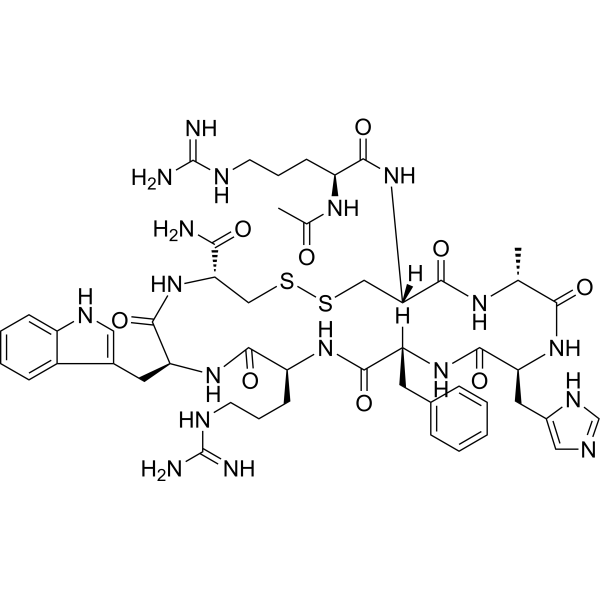 0 ImagesSynonyms: RM-493; BIM-22493; IRC-022493
Setmelanotide (RM-493) is a blood-brain barrier-permeable, selective MC4R agonist with a Ki value of 2.1 nM for hMC4R. Setmelanotide activates the CaMKK2/AMPK signaling pathway. Setmelanotide mediates body weight homeostasis, feeding regulation and energy expenditure modulation; it reduces food intake, induces weight loss, decreases obesity severity, increases daytime activity and energy expenditure, lowers levels of leptin, triglycerides, fasting insulin and diastolic blood pressure, improves insulin sensitivity, glucose tolerance and fatty liver condition, and reverses respiratory depression. Setmelanotide is applicable to research related to obesity, hyperinsulinemia, fatty liver and respiratory depression.
-
Melanotan (MT)-II
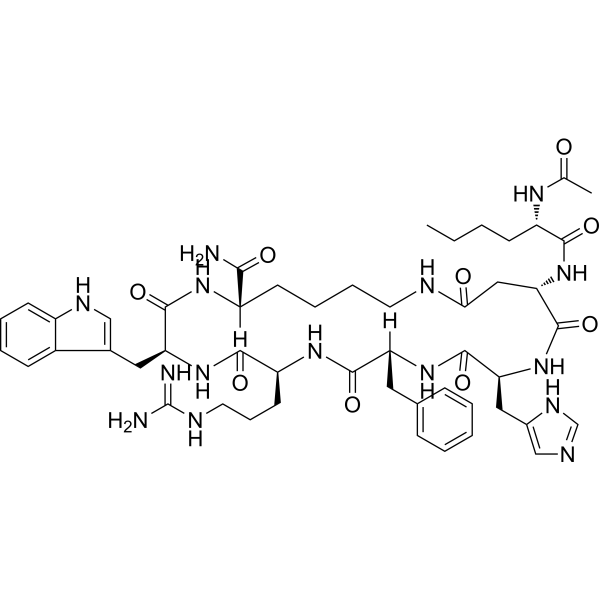 0 Images
Melanotan (MT)-II is a melanocortin receptor agonist. Melanotan (MT)-II activates melanocortin receptor 3 and melanocortin receptor 4, and stimulates the release of central endogenous oxytocin. Melanotan (MT)-II reverses recognition memory impairment, increased anxiety levels and reduced exploratory tendency in zebrafish exposed to short-term high-fat diet. Melanotan (MT)-II improves impaired social behavior indicators in mouse models of autism spectrum disorder. Melanotan (MT)-II induces weight loss, reduces food intake and exerts anorectic effects. Melanotan (MT)-II increases intracavernous pressure and erectile activity in brown rats. Melanotan (MT)-II can be used in studies related to memory impairment, anxiety, reduced exploratory behavior, autism spectrum disorder, obesity and erectile dysfunction.
-
Bremelanotide Acetate
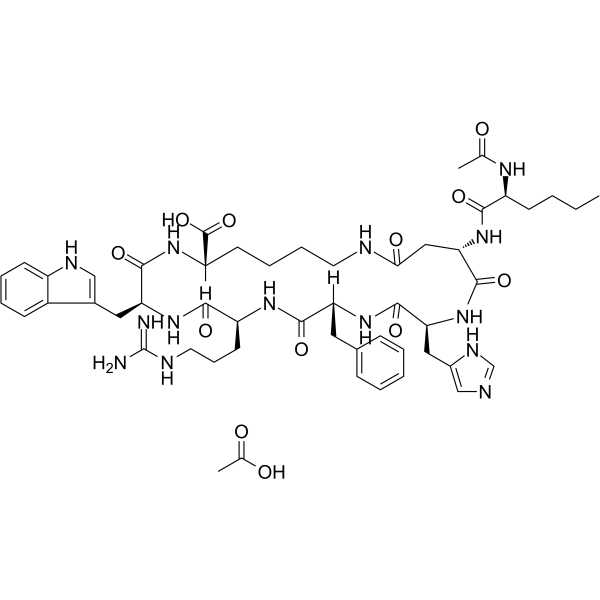 0 ImagesSynonyms: PT-141 Acetate
Bremelanotide (PT-141) Acetate is a melanocortin receptor agonist. Bremelanotide Acetate can activate MC4R and increases dopamine release. Bremelanotide Acetate induces appetitive sexual behaviors, female mounting behavior, and repetitive self-grooming. Bremelanotide Acetate can be used for the research of hypoactive sexual desire disorders.
-
LY2112688
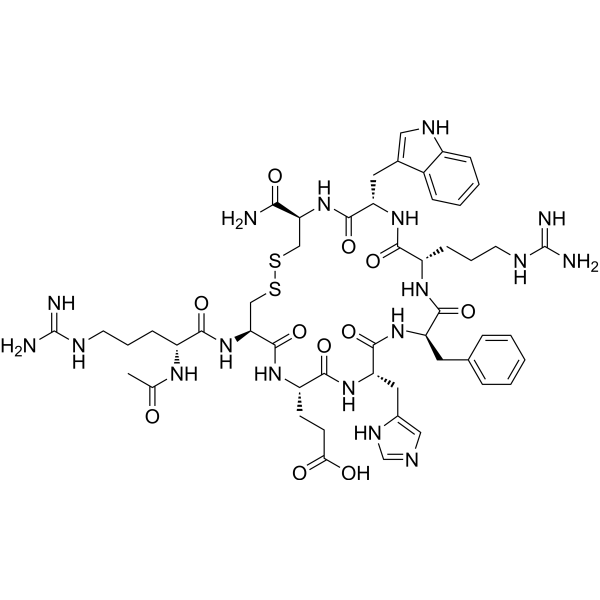 0 ImagesSynonyms: Ac-(d-Arg)-CEH-(d-Phe)-RWC-NH2
LY2112688 (Ac-(d-Arg)-CEH-(d-Phe)-RWC-NH2) is a synthetic peptide selective melanocortin 4 receptor (MC4R) agonist with a Ki of 0.13 nM for human MC4R and Ki values of 165, 74, and 1713 nM for human MC1R, MC3R, and MC5R, respectively. LY2112688 activates MC4R-mediated cAMP signaling and promotes PYY and GLP-1 release by activating peripheral MC4R in enteroendocrine L cells; Kir7.1 signaling in MC4R neurons is involved in its sustained suppression of food intake. LY2112688 inhibits food intake in vivo and can elevate heart rate and blood pressure. LY2112688 is useful for research on obesity, energy homeostasis, and MC4R signaling.
-
Setmelanotide TFA
 0 ImagesCat. No.: HY-19870ASynonyms: RM-493 TFA; BIM-22493 TFA; IRC-022493 TFA
Setmelanotide TFA (RM-493 TFA) is a blood-brain barrier-permeable, selective MC4R agonist with a Ki value of 2.1 nM for hMC4R. Setmelanotide TFA activates the CaMKK2/AMPK signaling pathway. Setmelanotide TFA mediates body weight homeostasis, feeding regulation and energy expenditure modulation; it reduces food intake, induces weight loss, decreases obesity severity, increases daytime activity and energy expenditure, lowers levels of leptin, triglycerides, fasting insulin and diastolic blood pressure, improves insulin sensitivity, glucose tolerance and fatty liver condition, and reverses respiratory depression. Setmelanotide TFA is applicable to research related to obesity, hyperinsulinemia, fatty liver and respiratory depression.
-
Bremelanotide
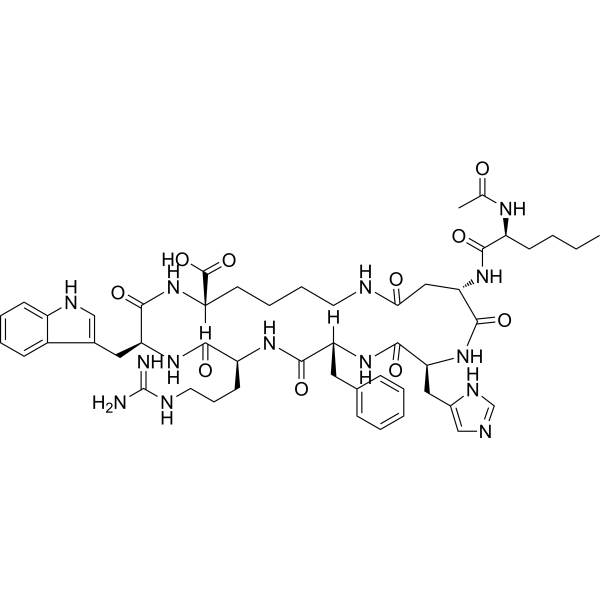 0 ImagesSynonyms: PT-141
Bremelanotide (PT-141) is a melanocortin receptor agonist. Bremelanotide can activate MC4R and increases dopamine release. Bremelanotide induces appetitive sexual behaviors, female mounting behavior, and repetitive self-grooming. Bremelanotide can be used for the research of hypoactive sexual desire disorders.
-
Resomelagon
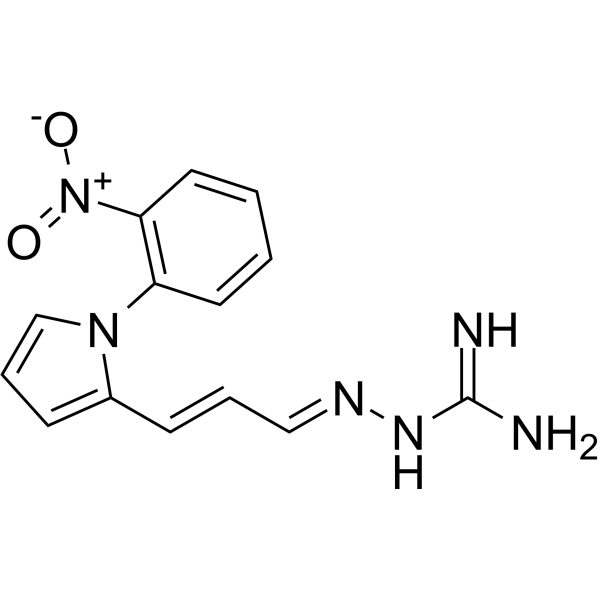 0 ImagesSynonyms: AP1189
Resomelagon (AP1189) is a potent, orally active melanocortin receptor (MR) agonist about MC1 and MC3. Resomelagon induces ERK1/2 phosphorylation and Ca2+ mobilization. Resomelagon has anti-inflammatory activity. Resomelagon can be used for obesity and chronic inflammation research.
-
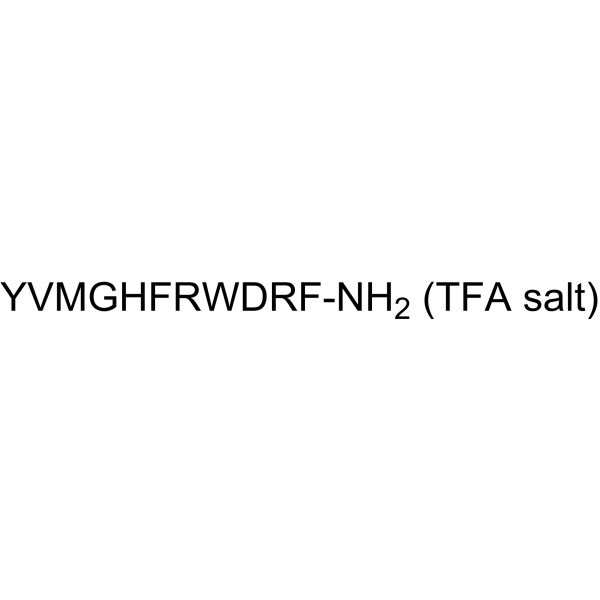
γ-1-Melanocyte Stimulating Hormone (MSH), amide
 0 ImagesCat. No.: HY-P1531CAS No.: 72629-65-3
γ-1-Melanocyte Stimulating Hormone (MSH), amide is a 11-amino acid peptide. γ-1-Melanocyte Stimulating Hormone (MSH) regulates sodium (Na+) balance and blood pressure through activation of the melanocortin receptor 3 (MC3-R).
-
γ1-MSH
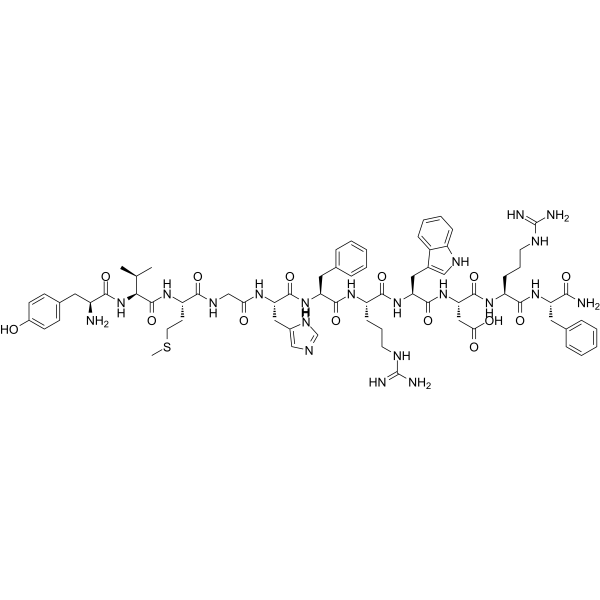 0 Images
γ1-MSH is a melanocortin MC3 receptor agonist, with a Ki of 34 nM for the rat MC3 receptor. γ1-MSH displays ~40-fold selectivity over MC4 (Ki=1318 nM).
-
[D-Trp8]-γ-MSH
![[D-Trp8]-γ-MSH](https://file.medchemexpress.com/product_pic/hy-p1217.gif "Click to View [D-Trp8]-γ-MSH Product Detail") 0 Images
0 Images[D-Trp8]-γ-MSH is a potent and selective agonist of melanocortin 3 (MC3) receptor, with IC50s of 6.7 nM, 600 nM and 340 nM for hMC3, hMC4 and hMC5, respectively in CHO cells. [D-Trp8]-γ-MSH could provide protection against multiple inflammatory disorders such as rheumatoid arthritis and colitis.
-
Setmelanotide monoacetate
 0 ImagesSynonyms: RM-493 monoacetate; BIM-22493 monoacetate; IRC-022493 monoacetate
Setmelanotide monoacetate (RM-493 monoacetate) is a blood-brain barrier-permeable, selective MC4R agonist with a Ki value of 2.1 nM for hMC4R. Setmelanotide monoacetate activates the CaMKK2/AMPK signaling pathway. Setmelanotide monoacetate mediates body weight homeostasis, feeding regulation and energy expenditure modulation; it reduces food intake, induces weight loss, decreases obesity severity, increases daytime activity and energy expenditure, lowers levels of leptin, triglycerides, fasting insulin and diastolic blood pressure, improves insulin sensitivity, glucose tolerance and fatty liver condition, and reverses respiratory depression. Setmelanotide monoacetate is applicable to research related to obesity, hyperinsulinemia, fatty liver and respiratory depression.
-
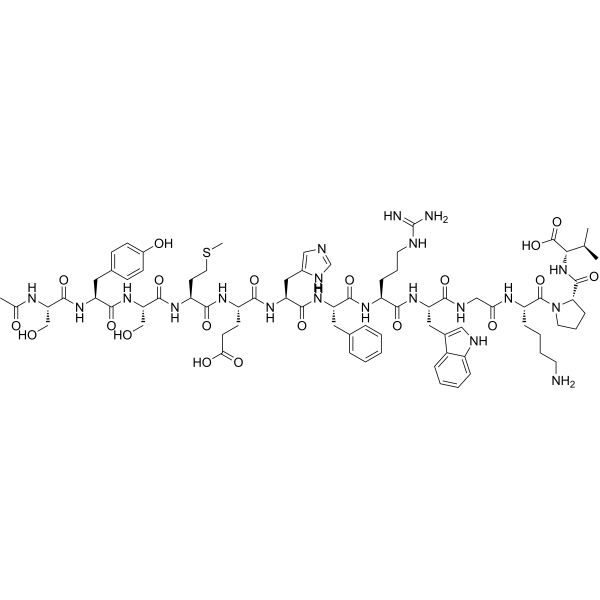
[D-Trp8]-γ-MSH TFA
![[D-Trp8]-γ-MSH TFA](https://file.medchemexpress.com/product_pic/hy-p1217a.gif "Click to View [D-Trp8]-γ-MSH TFA Product Detail") 0 ImagesCat. No.: HY-P1217A
0 ImagesCat. No.: HY-P1217A[D-Trp8]-γ-MSH TFA is a potent and selective agonist of melanocortin 3 (MC3) receptor, with IC50s of 6.7 nM, 600 nM and 340 nM for hMC3, hMC4 and hMC5, respectively in CHO cells. [D-Trp8]-γ-MSH TFA could provide protection against multiple inflammatory disorders such as rheumatoid arthritis and colitis.
-
RY764
 0 ImagesCat. No.: HY-111131CAS No.: 491845-95-5
-
Melanotan (MT)-II acetate
 0 ImagesCat. No.: HY-P0267ACAS No.: 1036322-26-5
Melanotan (MT)-II acetate is a melanocortin receptor agonist. Melanotan (MT)-II acetate activates melanocortin receptor 3 and melanocortin receptor 4, and stimulates the release of central endogenous oxytocin. Melanotan (MT)-II acetate reverses recognition memory impairment, increased anxiety levels and reduced exploratory tendency in zebrafish exposed to short-term high-fat diet. Melanotan (MT)-II acetate improves impaired social behavior indicators in mouse models of autism spectrum disorder. Melanotan (MT)-II acetate induces weight loss, reduces food intake and exerts anorectic effects. Melanotan (MT)-II acetate increases intracavernous pressure and erectile activity in brown rats. Melanotan (MT)-II acetate can be used in studies related to memory impairment, anxiety, reduced exploratory behavior, autism spectrum disorder, obesity and erectile dysfunction.
-
(E/Z)-Resomelagon acetate
 0 ImagesCat. No.: HY-168383CAS No.: 959850-74-9Synonyms: (E/Z)-AP1189 acetate
(E/Z)-Resomelagon acetate is an agonist of melanocortin receptor 1 (MC1R) and MC3R with anti-inflammatory activities. (E/Z)-Resomelagon can be utilized in inflammation research.
- 1



